Guide: Saffron for Exercise Soreness and Sprinting—Interesting Results, Different Questions
Saffron has shown a soreness signal in one study but did not improve acute repeated-sprint performance in another controlled trial.
Saffron may influence soreness or mood-related outcomes in selected studies, but acute sprint performance has not improved and the evidence is too small for broad claims.
One spice, several very different claims
Saffron research can look stronger than it is because studies measure different things: soreness, mood, heart-rate variability, sprint time or enjoyment. Those outcomes cannot be pooled into a promise of better recovery and performance. A small trial reported less delayed soreness after eccentric exercise, while a recent controlled sprint study found no acute performance benefit. Athletes should separate comfort from capacity. A tart cherry recovery guide offers a useful comparison because even a supplement with multiple recovery studies must be judged by the exact protocol and outcome. Saffron remains an intriguing botanical, but the sports case is early and product quality is unusually important for this costly spice.
What its compounds might do
Crocin, crocetin and safranal are among saffron’s studied constituents. Laboratory work suggests effects on oxidative stress, inflammation and nervous-system signaling. Those mechanisms could influence how exercise feels or how soreness develops, yet they do not guarantee faster tissue repair or greater power. A lower soreness score is subjective and valuable, but it does not prove that muscle force recovered. The distinction also appears in an omega-3 recovery guide, where biomarkers, soreness and performance must be read separately. Extract composition, dose and treatment length vary, and culinary saffron cannot be assumed to match a standardized capsule used in a trial.
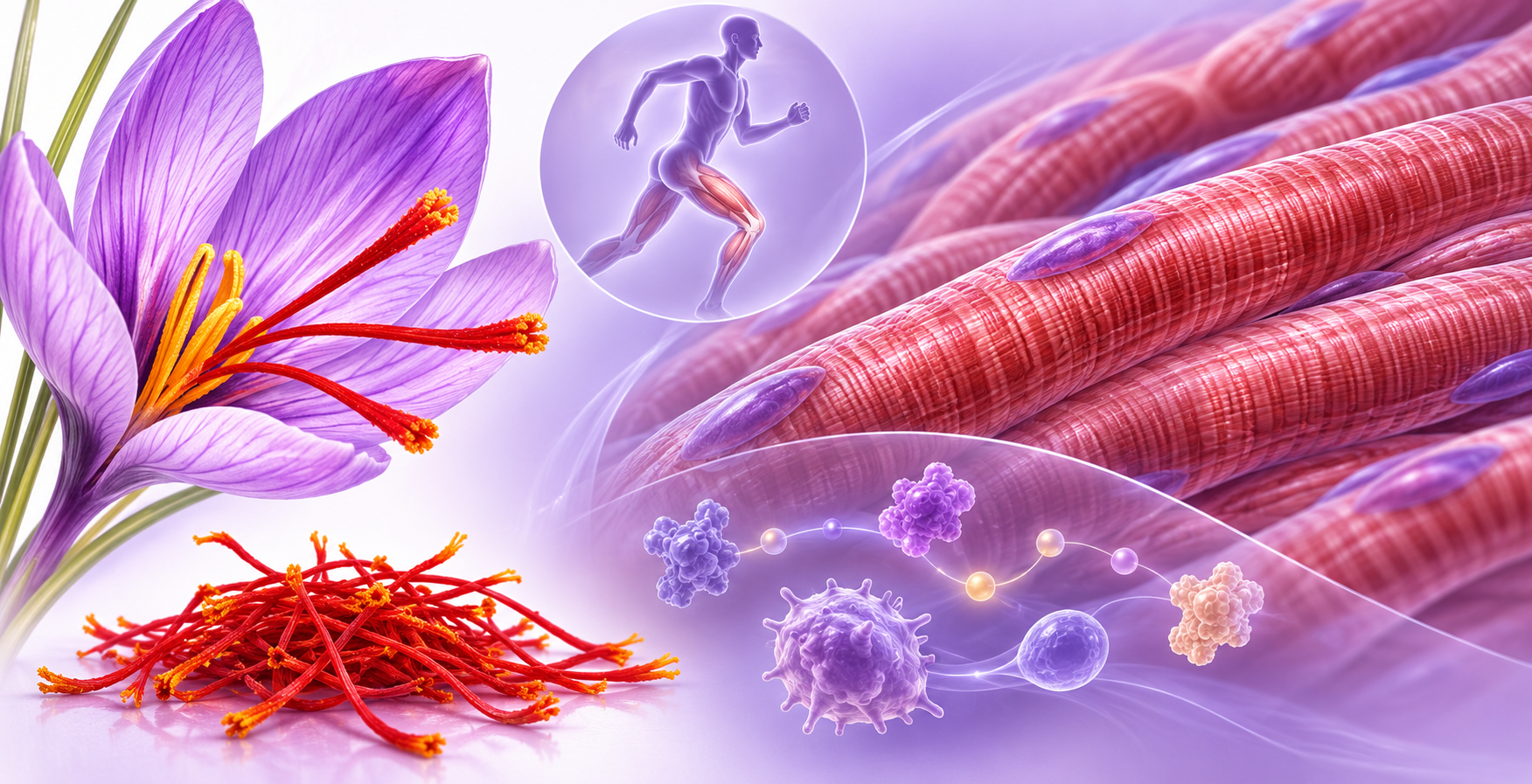
The soreness and sprint trials answer different questions
A randomized study in young men found that saffron supplementation around a damaging eccentric exercise bout reduced reported delayed-onset soreness and selected muscle-damage markers. It was a small, specific model of unaccustomed work. In contrast, a 2024 randomized crossover study found that an acute saffron dose did not improve repeated-sprint performance. Another exploratory trial examined physical activity enjoyment and autonomic measures rather than competitive output. Together, these studies suggest possible effects on experience or recovery signals, but no dependable acute speed boost. They do not establish an ideal dose, long-term training adaptation or benefit in a broad athlete population.
Quality and safety checks matter
Saffron is vulnerable to adulteration because genuine material is expensive. Look for the botanical name Crocus sativus, a standardized extract description, a stated amount and independent testing. Avoid products that hide saffron inside a large blend. Typical supplement doses are far below amounts associated with serious toxicity, but nausea, headache, dizziness and allergic reactions can occur. High doses are inappropriate in pregnancy, and saffron may affect blood pressure, bleeding or mood-related medicines. If a formula also includes ashwagandha, use an ashwagandha exercise evidence review rather than crediting all effects to saffron. Ingredient studies do not validate the finished blend.
A recovery decision that stays practical
First solve the recovery problems you can measure: sudden workload spikes, insufficient energy, low protein, poor sleep or an overly dense schedule. If a healthy adult still tests saffron, choose one verified extract, keep the training week stable and record soreness plus a functional measure such as jump height, submaximal bar speed or repeated pace. Repeat the comparison; one easy day proves little. A pre-sleep protein guide may be more relevant when total protein and timing are the gap. Stop for new bleeding, severe dizziness, rash or mood changes and consult a clinician when medicines, pregnancy or a medical condition are involved. The honest verdict is promising for limited outcomes, unproven as a broad performance aid.
Keep the outcome matched to the claim
A recovery claim should be backed by recovery data, and a speed claim by speed data. Saffron research currently spans mood, soreness, biomarkers and sprinting, which makes selective marketing easy. A stronger evidence base would use the same standardized extract across independent laboratories and measure soreness alongside force, range of motion and subsequent-session performance. It would also include women and trained athletes. Until then, a reduction in one soreness score should not be presented as faster muscle repair, and an enjoyment result should not be presented as greater fitness. Matching the label language to the actual endpoint is the simplest way to keep an interesting botanical from becoming an exaggerated sports promise.