Cordyceps supplements for sport: species and extract matter
A guide to Cordyceps performance evidence, species identification, standardized extracts, mixed formulas and trial limitations.

Cordyceps research contains promising signals, but species, extract and formula differences prevent broad conclusions about commercial products.
Human evidence remains small
A 2026 narrative review identified five human intervention studies of Cordyceps militaris, totaling 321 participants. Some studies reported improvements in selected aerobic, exercise-capacity or recovery measures, while findings were inconsistent. The review highlighted small samples, varied participants and exercise protocols, weak reporting, limited trial registration and multi-ingredient interventions. This is not a foundation for saying Cordyceps has no effect, but it is too uncertain for a universal ergogenic claim. A handful of heterogeneous studies cannot validate an entire shelf of mushroom products.
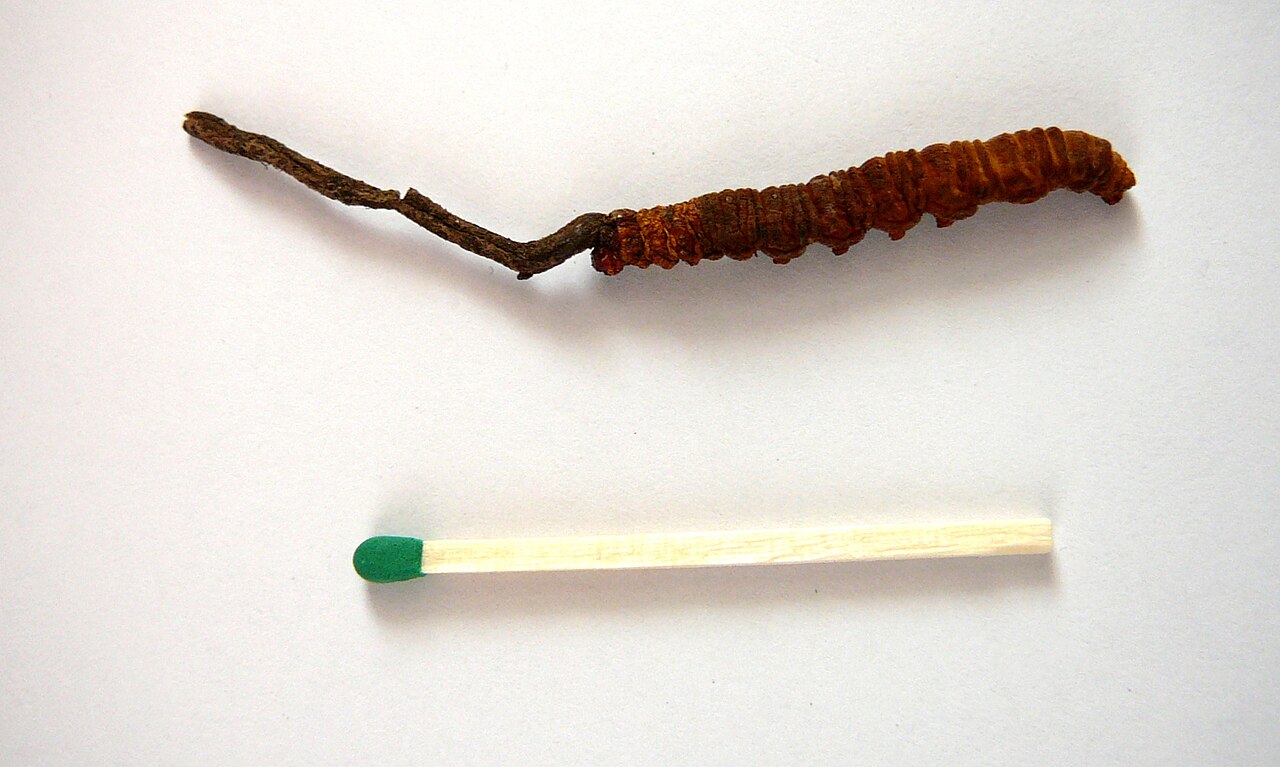
Species names are not interchangeable
Cordyceps militaris, Ophiocordyceps sinensis and cultured mycelial products may appear under the broad word Cordyceps. They can differ in production, composition and studied constituents. A paper on one species or preparation should not be cited as proof for another. Labels should state the organism, part or material, extract ratio when relevant and standardized constituents. A picture of a fruiting body does not establish that the capsule contains the same material or amount used in a trial.
A new acute trial illustrates narrow findings
A 2026 randomized crossover trial enrolled 12 recreationally active young men and tested one gram of standardized C. militaris extract before maximal cycling. The supplement changed resting oxygen uptake and a post-exercise reaction-time measure, but did not change peak exercise oxygen uptake or the magnitude of several exercise-related responses. The small sample and isolated cognitive result need replication. Describing the trial as proof of better exercise performance would go beyond its actual endpoint pattern.
Multi-ingredient studies cannot isolate the mushroom
Some Cordyceps products combine mushrooms with caffeine, adaptogenic herbs, amino acids or vitamins. If a trial tests that mixture, the contribution of Cordyceps cannot be determined unless the design includes appropriate component comparisons. Conversely, an isolated-extract study cannot validate the complete blend. Consumers should compare every active ingredient, disclosed amount and serving. Proprietary matrices make it especially difficult to connect a product with the literature while increasing the chance of overlap with pre-workouts or other supplements.

Quality control is central to fungal products
Species authentication, contaminants and batch consistency are practical concerns that a performance study does not resolve. Independent testing can help, although certification does not prove effectiveness. Competitive athletes need sport-appropriate certification rather than relying on natural or traditional language. People with mushroom allergy, autoimmune conditions, bleeding risk or relevant medicines should discuss use with a clinician. Long-term safety in diverse athletic populations remains less certain than marketing often suggests.
Use a claim-matching checklist
A responsible evaluation asks which species was studied, whether the extract is chemically comparable, who participated, what exercise test changed and whether the product itself was tested. It also separates endurance, reaction time, biomarkers and recovery rather than calling all of them performance. Cordyceps is a plausible research topic with early positive signals, but current evidence is not standardized enough to identify one proven product or protocol. Athletes should view it as experimental and secondary to training, nutrition and sleep, not as a scientifically settled mushroom shortcut.
Traditional use does not validate a modern extract
Historical use can explain interest in a fungus, but it cannot establish the composition, effectiveness or safety of a concentrated modern supplement. Cultivation methods, substrates and extraction can alter the chemical profile, while a standardized research extract may bear little resemblance to a traditional preparation. Likewise, a modern trial cannot retroactively validate every traditional claim. Consumers should treat tradition, laboratory mechanism and human performance evidence as three separate layers. Each can be discussed honestly without substituting for the others. A product that leads with centuries of use should still provide current identity testing, ingredient disclosure and direct support for its athletic claim. Cultural history is context, not a randomized comparison.
Future trials should publish chemical characterization, preregister one primary performance endpoint and use enough participants to distinguish a repeatable effect from ordinary test variation in real athletes.
Sources & further reading
This article provides educational information. Ask a qualified clinician or pharmacist about your symptoms, medical conditions, medicines and supplement interactions.