Myogentra Review: Named Extracts, One-Capsule Convenience, and the Training Evidence
A training-minded review of Myogentra’s current formula, KSM-66 research, nutrient contribution, supply value, quality questions, and purchase terms.

Myogentra offers a clear one-capsule serving and recognizable extracts in a broad men’s-wellness formula. Its practical convenience and supply pricing are appealing; training claims and sport certification require evidence beyond ingredient familiarity.
A clear product concept for an organized routine
Training-minded men often want supplement choices that are understandable and manageable. Myogentra's current offer presents a broad men's-wellness formula in one capsule daily, combining named botanicals, nutrients, and a supporting blend under its Myogen positioning. For someone attracted by several ingredient categories, the coordinated format can reduce the number of independent purchases and reorder decisions.
This documentary review examines the current official label, relevant primary ingredient studies, practical supply details, and purchase terms. It does not describe hands-on testing, a change in lifting performance, or a private hormone panel. For Performance Nutrition Wire, the positive question is how the formula's actual features fit an active routine. Recognizable ingredients and a defined serving are useful starting points, while a clinical outcome from the finished product requires evidence tied to that specific combination and exposure.

The one-capsule serving is a practical advantage
The displayed label identifies one capsule as a serving and 30 servings per container. That clarity makes the daily concept more concrete than a product image with an undefined serving. A shopper can relate the current formula to the advertised supply duration and compare what it contributes with a multivitamin or another product already being used. It also makes the stated supply prices easier to interpret.
The label representation is not an independent analysis of a purchased batch, so the current supplied bottle and directions still matter. Within that boundary, the serving definition is a genuine convenience feature. It gives the buyer a specific daily product to discuss rather than leaving several quantities disconnected from the routine. It does not establish that every ingredient matches a research dose, but it allows that comparison to be made accurately, which is an essential part of an informed training-oriented review.
The current core has recognizable ingredient identities
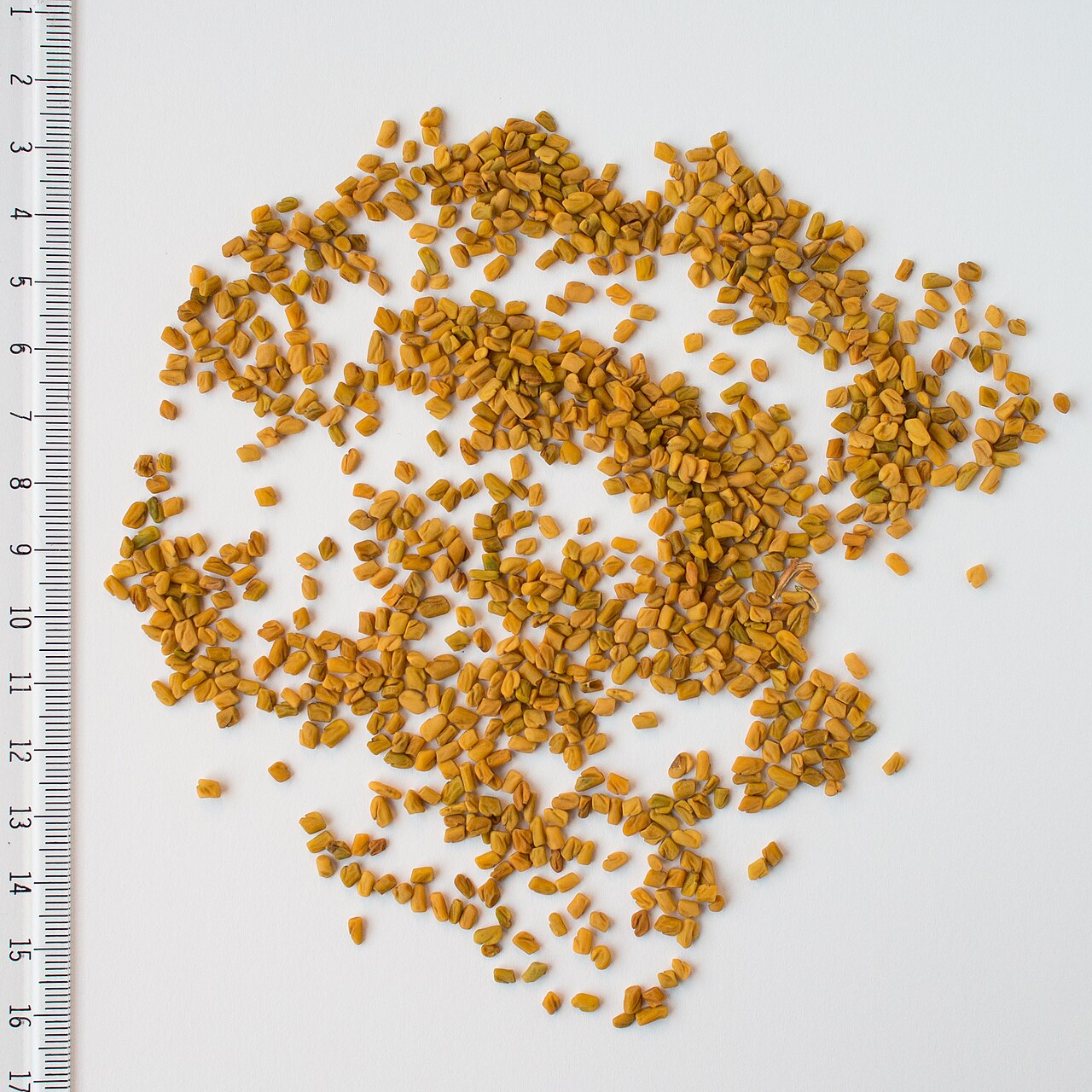
Myogentra lists fenugreek standardized extract at 150 milligrams, Long Jack extract at 135.5 milligrams, and KSM-66 ashwagandha root extract at 75 milligrams. Magnesium as oxide adds 41.5 milligrams, zinc as oxide 7.5 milligrams, and vitamin B6 as pyridoxine hydrochloride 2.5 milligrams. These names and quantities create a clear starting point for evaluating a broad formula rather than an entirely unnamed vitality blend.
The panel also prints standardization descriptions, including 50 percent fenusides for fenugreek. Those specifications are useful questions to investigate, while independent identity or content verification would need supporting documentation. The Myogen name organizes the product's proprietary story; it should not be treated as a separate clinically tested molecule merely because it has a distinctive name. The actual panel is the more informative guide to what the current product declares and which human research can reasonably be considered.
KSM-66 has the most direct training-related evidence trail
A randomized study of KSM-66 ashwagandha root extract alongside resistance training reported favorable selected strength, recovery-related, and body-composition findings. That is a substantive human research connection and an understandable reason a men's-wellness formula would include the ingredient. A named extract makes the discussion more specific than a broad claim that a traditional plant supports performance.
The study used 600 milligrams daily for eight weeks, while Myogentra's displayed daily serving supplies 75 milligrams. Those are different exposures, and the trial did not test this finished combination. The participants and exercise program also matter to interpretation. The constructive positive conclusion is that Myogentra selects a recognizable ingredient with research in an active setting. It does not follow that the current capsule reproduces every training endpoint or that increasing capsule intake to imitate a trial is appropriate. The product should be evaluated as sold and directed.
Training outcomes need precise names
Strength, muscle size, body-composition estimates, soreness-related measures, and hormone concentrations are different outcomes. A favorable finding for one does not automatically establish the rest. This matters when a broad product presentation connects vitality, muscle, testosterone, and confidence. The terms may sound related, but the evidence must remain attached to the result that was actually measured.
For a buyer, precision can make enthusiasm more useful. Someone may value a convenient formula with a named research-linked extract without expecting a guaranteed lifting improvement. Someone whose main goal is a specific performance outcome needs evidence matching that outcome and intervention. Myogentra's clear serving helps make the comparison possible, while the dose differences and unverified finished-product results define its limits. A positive assessment is strongest when it identifies exactly what is appealing rather than importing a collection of trial findings into a different retail capsule.
Fenugreek adds another botanical research pathway
The current panel gives fenugreek both a quantity and a standardization description. That is useful for someone who likes comparing botanical preparations rather than choosing on reputation alone. Human studies of particular fenugreek extracts have examined men's-wellness and hormone-related outcomes, providing a real literature to investigate. The important next question is whether the tested preparation and exposure match the ingredient in the current product.
An extract's common plant name does not establish equivalence. Nor does a laboratory hormone change automatically prove better strength, recovery, sexual experience, or a meaningful improvement in daily function. Myogentra's ingredient selection can be appreciated without treating every fenugreek paper as a clinical demonstration for the bottle. A training-minded buyer can ask for the precise extract specification and relevant study, then judge how much of the purchasing appeal comes from the coordinated format and how much depends on an outcome still requiring product-specific evidence.
Long Jack brings a separate human-study context
A randomized trial of a particular aqueous Eurycoma longifolia extract followed men over twelve weeks and reported favorable selected sexual-well-being findings. That makes Long Jack a research-relevant men's-wellness ingredient rather than only a traditional name. It gives a shopper an actual primary study to examine when considering the current formula's botanical core.
The trial used a defined preparation at 300 milligrams daily. Myogentra lists 135.5 milligrams of its own extract, and its supporting blend includes tongkat ali without an individual amount. Those common names usually point to the same botanical, so total exposure cannot be calculated from the separate mentions. The study also was not a demonstration of athletic performance from the finished product. Its positive relevance is a human research connection, with extract identity, amount, and endpoint kept visible rather than assumed to be identical across formulations.
The supporting blend offers breadth rather than dose isolation
The 325-milligram blend includes arginine, tribulus, horny goat weed, tongkat ali, maca, saw palmetto, citrulline, Butea superba, muira puama, damiana, Xanthoparmelia, and rhodiola. A man who wants a coordinated selection may appreciate that range. It consolidates several familiar wellness categories and presents an alternative to managing many single-ingredient bottles.
Individual amounts are undisclosed, so the total is not a dose for every component. An arginine trial using 6 grams daily in men with a defined vascular erectile condition is not a dose-matched test of a blend totaling 325 milligrams. Circulation biology also is not automatically improved endurance, muscle gain, or permanent enlargement. The visible product characteristic is variety and convenience. Whether the complete combination produces a meaningful additional outcome requires research on that combination rather than assuming synergy from a list of ingredient names.

Nutrient amounts help organize the whole stack
Magnesium, zinc, and vitamin B6 add a nutritional component to Myogentra's botanical concept. Their normal physiological roles make them understandable ingredients, and the disclosed daily amounts let a buyer check overlap with a multivitamin, a recovery product, or another men's-wellness formula. That visibility is useful when the goal is a coherent routine rather than simply increasing the number of items being taken.
A nutrient's importance does not mean extra intake improves performance in every adequately supplied person. The practical question is what the current capsule adds to the actual routine. Form matters too: the label identifies magnesium and zinc as oxides. A pharmacist can help assess overlapping amounts or relevant tolerance questions if several products are involved. The one-capsule format is most convenient when its nutritional contribution is understood, allowing the buyer to appreciate consolidation without overlooking ingredients already supplied elsewhere.
Absorption claims need their own evidence
The official presentation uses precise uptake multipliers and suggests differences associated with package or protocol choices. A meaningful absorption comparison would need an appropriate pharmacokinetic study identifying the actual formulation, administration, comparator, and measured substances. The reviewed dossier did not identify a finished-product study substantiating the exact sixfold or package-count uptake figures.
That distinction matters to value. Buying a larger supply changes how much product is ordered and its average cost; it does not by itself demonstrate a change in the biology of one capsule. Myogentra has tangible purchase features that do not require that assumption, including a defined serving and lower unit prices in larger offers. A buyer can value those documented features while asking the seller for the study behind a precise multiplier. The resulting comparison is clearer than allowing a promotional number to stand in for a verified formulation or outcome advantage.
The stated supply makes price comparisons concrete
At one capsule daily and 30 servings per bottle, the displayed 30-day offer of $79.95 averages about $2.67 per day. The 60-day total of $139.95 averages about $2.33, and the 90-day total of $179.95 averages about $2.00. A separate one-time button at $99.95 would average about $3.33 across the stated 30-day supply. These are arithmetic comparisons of the displayed offers, before any checkout adjustments, and the exact purchase type remains important to verify.
For a shopper who has already confirmed the current label and compatibility, a larger supply may offer an attractive unit cost and fewer reorder decisions. A person still checking sport certification or dietary materials may value the smaller immediate commitment more highly. Neither choice changes the declared daily ingredient amount. The comparison is most useful when cost and formulation are kept together: what does one day supply, does that combination fit the goal, and which commercial arrangement accompanies the selected price? Those are tangible questions that let Myogentra’s organized-format appeal be assessed without depending on an unsupported absorption multiplier or a guaranteed training result.
Read the evidence library at the source level
The research dossier identified several official-library links whose indexed subjects did not match their attached ingredient descriptions. They included unrelated analytical chemistry, marine biology, and psychiatric classification papers. Those links cannot support the advertised ingredient claim simply because they point to a scientific database. This review therefore relies on verified primary trials and NIH summaries for the research discussion.
That is a concise evidence-quality limitation rather than a reason to ignore the actual product panel. The formula still has recognizable botanicals, visible nutrient amounts, and a clear daily format. A stronger bibliography would improve the connection between those features and the seller's scientific explanation. A research-minded buyer can ask for corrected citations and complete study reports, keeping the ingredient-selection appeal intact while ensuring that a source really addresses the preparation, population, and outcome for which it is being cited.
Sport certification is distinct from general quality language
The seller describes testing and manufacturing standards. A tested athlete needs an additional, specific answer about prohibited substances. A general third-party-testing statement is not automatically a verified sport-certification listing for the exact current product. No such certification was established in the reviewed dossier. A competitor should check current certification information and applicable support guidance before deciding whether a supplement fits sport requirements.
USADA explains that third-party certification can reduce supplement risk but does not eliminate it. This question is separate from whether an ingredient has interesting clinical research. A lot-specific certificate can also clarify identity, potency, or contaminant screening, depending on what was actually measured. Those documents do not by themselves establish performance benefits. The positive coordinated-format concept is most useful when quality documentation and competition eligibility are evaluated at the appropriate level rather than compressed into one broad use of the word tested.
Personal fit and purchase value complete the comparison
The displayed label includes gelatin and FD&C colorants, despite separate vegan-friendly and no-dye wording. Resolve that discrepancy if those requirements matter. Ashwagandha also warrants review with certain thyroid, liver, autoimmune, or interacting-medicine concerns. The complete current label can support a targeted discussion with a pharmacist; prescribed care should not be changed to accommodate the supplement. This review does not invent capsule comfort or personal tolerability.
The shop displays 30-, 60-, and 90-day offers at $79.95, $139.95, and $179.95, with free U.S. shipping advertised. The separate $99.95 one-time button makes order type important to confirm, including any renewal terms. The shop's 30-day guarantee differs from the 90-day return policy, so clarify the governing conditions. Overall, Myogentra's strongest appeal is an organized one-capsule formula with identifiable extracts and useful supply choices. For active men, its best assessment keeps study matching, sport requirements, and the actual purchase arrangement clear, allowing the product to be considered on its genuine wellness merits.
Sources & further reading
- Myogentra current official shop and offers ↗
- Myogentra displayed Supplement Facts image ↗
- Myogentra official purchase terms ↗
- Myogentra official return policy ↗
- Ashwagandha and resistance training: randomized trial ↗
- Eurycoma longifolia and sexual well-being: randomized trial ↗
- Fenugreek and male well-being: randomized trial ↗
- L-arginine and vascular erectile dysfunction: randomized trial ↗
- NCCIH: Ashwagandha ↗
- NIH ODS: Ashwagandha ↗
- Myogentra official research library ↗
- Myogentra official science page ↗
- USADA ↗
This article provides educational information. Ask a qualified clinician or pharmacist about your symptoms, medical conditions, medicines and supplement interactions.